“My soul is from elsewhere, I’m sure of that, and I intend to end up there” – Rumi
I didn’t seek Kashi, It Came to me
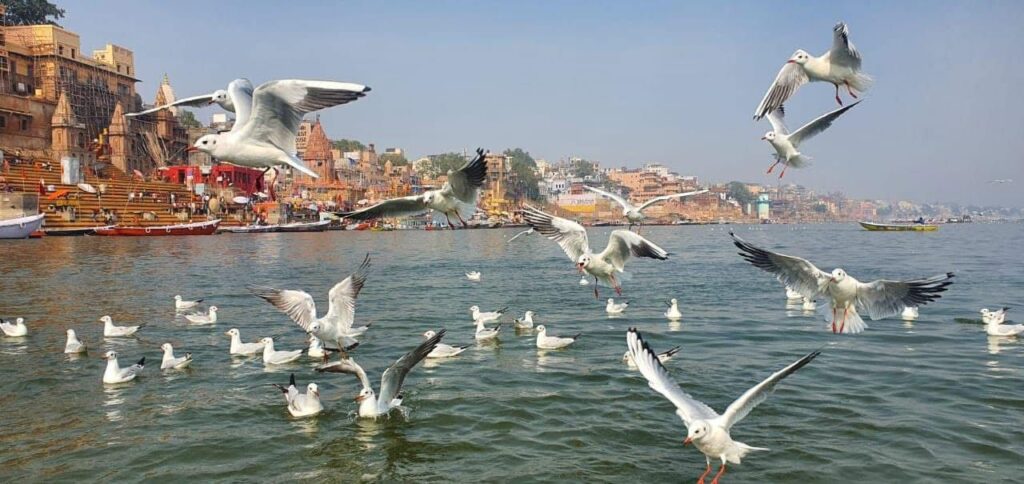
Most journeys to Kashi begin in grief, as my first unplanned trip to Kashi. It was a journey born not from wanderlust, but from loss. I arrived for the said purpose and found myself drawn to the stillness in the sacred chaos, and its way of holding space for everything – grief, prayer, and healing.
Kashi has long been considered the place of liberation – a place where life and death share the same narrow streets, where rituals of the departed are as much a part of the daily rhythm as prayer or aarti by the ghats. Death isn’t tucked away behind hospital walls here; it walks right beside you – visible, sacred, accepted.
Many elderly people move to Kashi to spend their final years, waiting for liberation in the city believed to free the soul. There is a certain peace and surrender, not sadness, in that wait that I could sense and deeply feel. It made me realize how much of my life I had spent resisting change and loss; subsequently, I slowly began to let go.
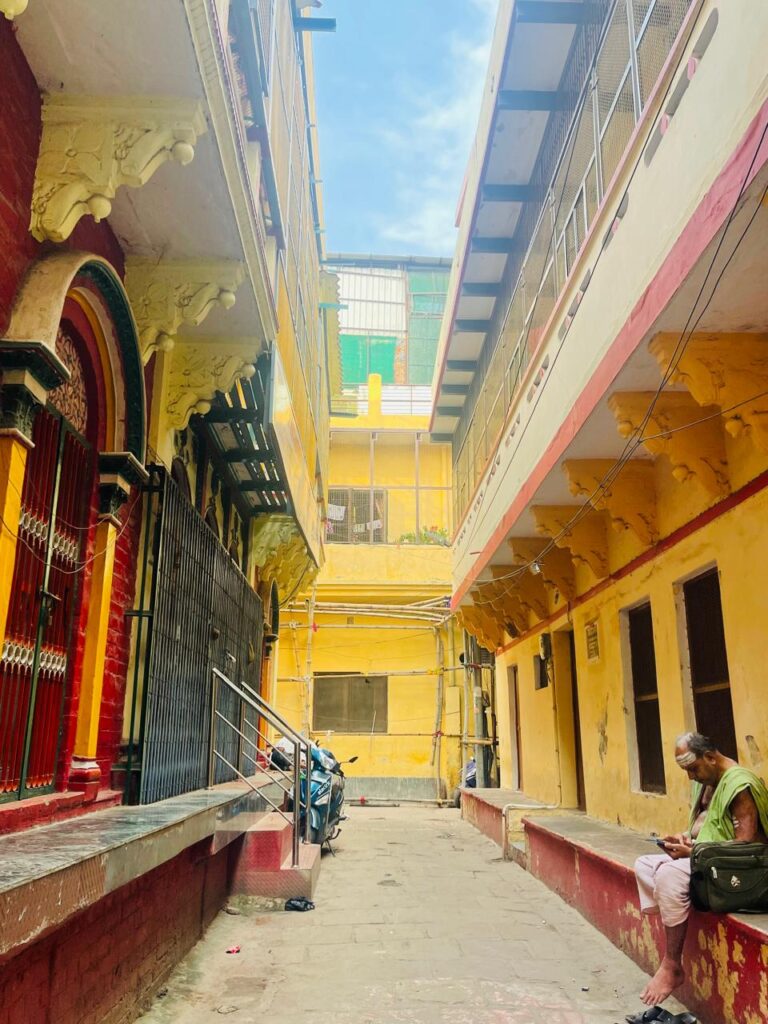
One of many alleys in Kashi, echoing a scene frozen in time
In Kashi, Everyday and Space feel sacred
There was no sightseeing list, nor a tourist agenda for the trip.
Nonetheless, in my quiet wandering, it was hard to miss the vibrant magnificence of the alleys of Kashi and a glimpse of daily life in this timeless city that has seen countless lifetimes. I walked past one such alley with the bright blue sky peeping from above, a priest was just casually getting on with his day, with a strong incense fragrance permeating around him as I walked by.
Every turn revealed something sacred. Tiny temples nestled between aging homes are the most notable facet, unmarked yet alive with quiet devotion.
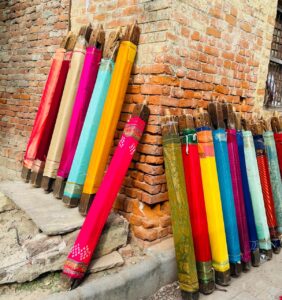
Every street seems to hold some meaning. I passed by banarasi weaves rolled like scrolls on the pavement, exuding a vibrant, rich culture of woven threads. They were silent storytellers and a reminder of the humble beginnings of the richest of the banarasi weaves.
Cows meandered through narrow lanes like old residents, while tuk-tuks whizzed by, honking through the maze of alleys. It was noisy, sacred, chaotic – all at once. The scent of frying kachoris and chai at every corner added to the vibe.
Kashi is a place which you don’t “plan” to see – this wasn’t about travel. It was about presence and experiencing the city as it comes.
From Grief to Grounding
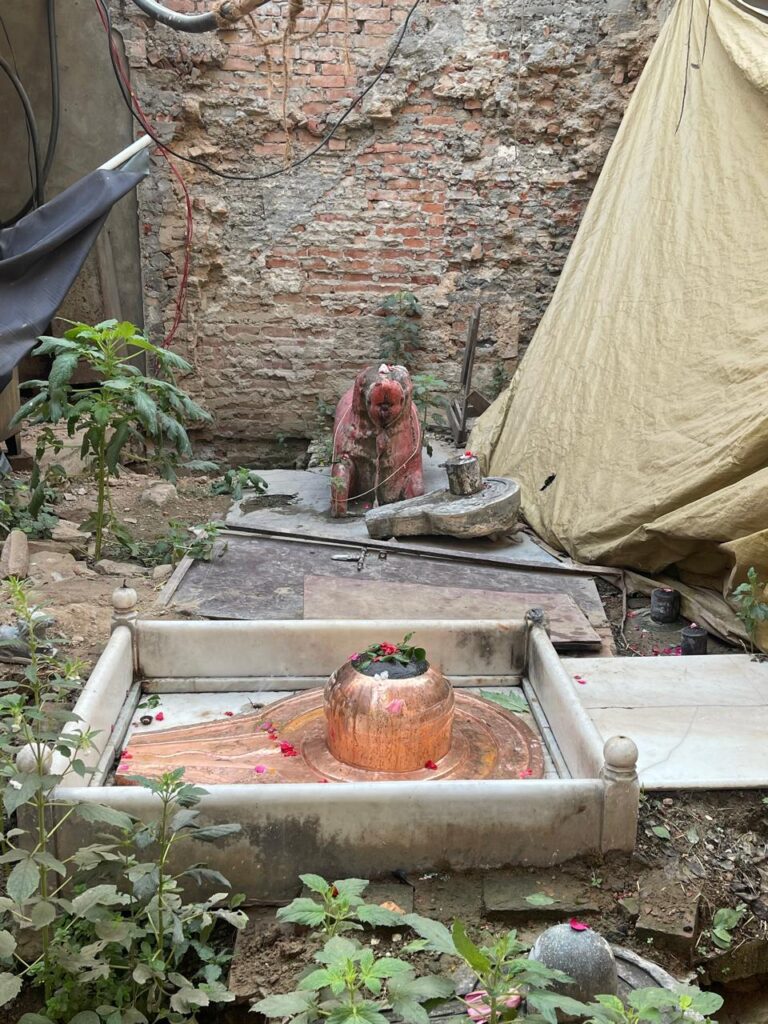
Everywhere I walked, I noticed Shivlings, a stark reminder that divinity isn’t confined to temples here. It’s woven into daily life. And maybe that’s what this city taught me most: you don’t have to search far for something sacred – it’s always near, always watching, always present.
Kashi reminded me that even in grief, you can find grounding. Even in mourning, there is meaning.
This wasn’t a journey of escape, it was one of return – to myself, to presence, to stillness.
This is the first of many such stories on my, roamingsoultales. And I couldn’t think of a more powerful place to start than here – where souls leave, linger and somehow, lead you back to yourself.
One of countless shivlings embedded across Kashi, Har Har Mahadev
Have you ever found unexpected comfort in a place during a difficult time? I’d love to hear your story – share in comments below. Thank you for stopping by.
4 thoughts on “How to Experience Kashi, Beyond the Ghats & Ganges”
Very good depiction of Kashi visually as well as in words which sound so poetic.
I was able to visualise the quiet corners of Kashi which only those who visit can experience personally.
Through the different media platforms we only see the crowded and chaotic Kashi mostly.
Now, I’m looking forward to visiting Kashi not to grieve the loss of someone but to discover the quietness amidst the madness and find some solace.
I am so glad you have a different perception of Kashi post the read, and I hope that you get to experience it very soon.
Thank you for sharing your thoughts.
Winning Hearts of the World
This digital sanctuary for the roaming soul unveils holy destinations with remarkable clarity and profound insight. Its meticulously curated details, a veritable pilgrimage of information, bespeak an authorial wisdom of considerable depth. The seamless confluence of evocative prose and substantive spiritual guidance elevates the planning experience beyond the mundane, offering true intellectual and devotional succor. One apprehends forthwith the dedication invested in its genesis, rendering it a paragon of virtual pilgrimage guidance, a sine qua non for the discerning spiritual traveler.
Very good depiction of Kashi visually as well as in words which sound so poetic.
I was able to visualise the quiet corners of Kashi which only those who visit can experience personally.
Through the different media platforms we only see the crowded and chaotic Kashi mostly.
Now, I’m looking forward to visiting Kashi not to grieve the loss of someone but to discover the quietness amidst the madness and find some solace.
I am so glad you have a different perception of Kashi post the read, and I hope that you get to experience it very soon.
Thank you for sharing your thoughts.
This digital sanctuary for the roaming soul unveils holy destinations with remarkable clarity and profound insight. Its meticulously curated details, a veritable pilgrimage of information, bespeak an authorial wisdom of considerable depth. The seamless confluence of evocative prose and substantive spiritual guidance elevates the planning experience beyond the mundane, offering true intellectual and devotional succor. One apprehends forthwith the dedication invested in its genesis, rendering it a paragon of virtual pilgrimage guidance, a sine qua non for the discerning spiritual traveler.
Appreciate your kind words. Thanks for taking the time to stop by and sharing your thoughts.